

How 2008's Speed Racer Paved the Way for Live-Action One Piece
The Wachowskis got crucified for Speed Racer in 2008. Eighteen years later, Netflix's One Piece is using the exact same visual grammar — and it works.
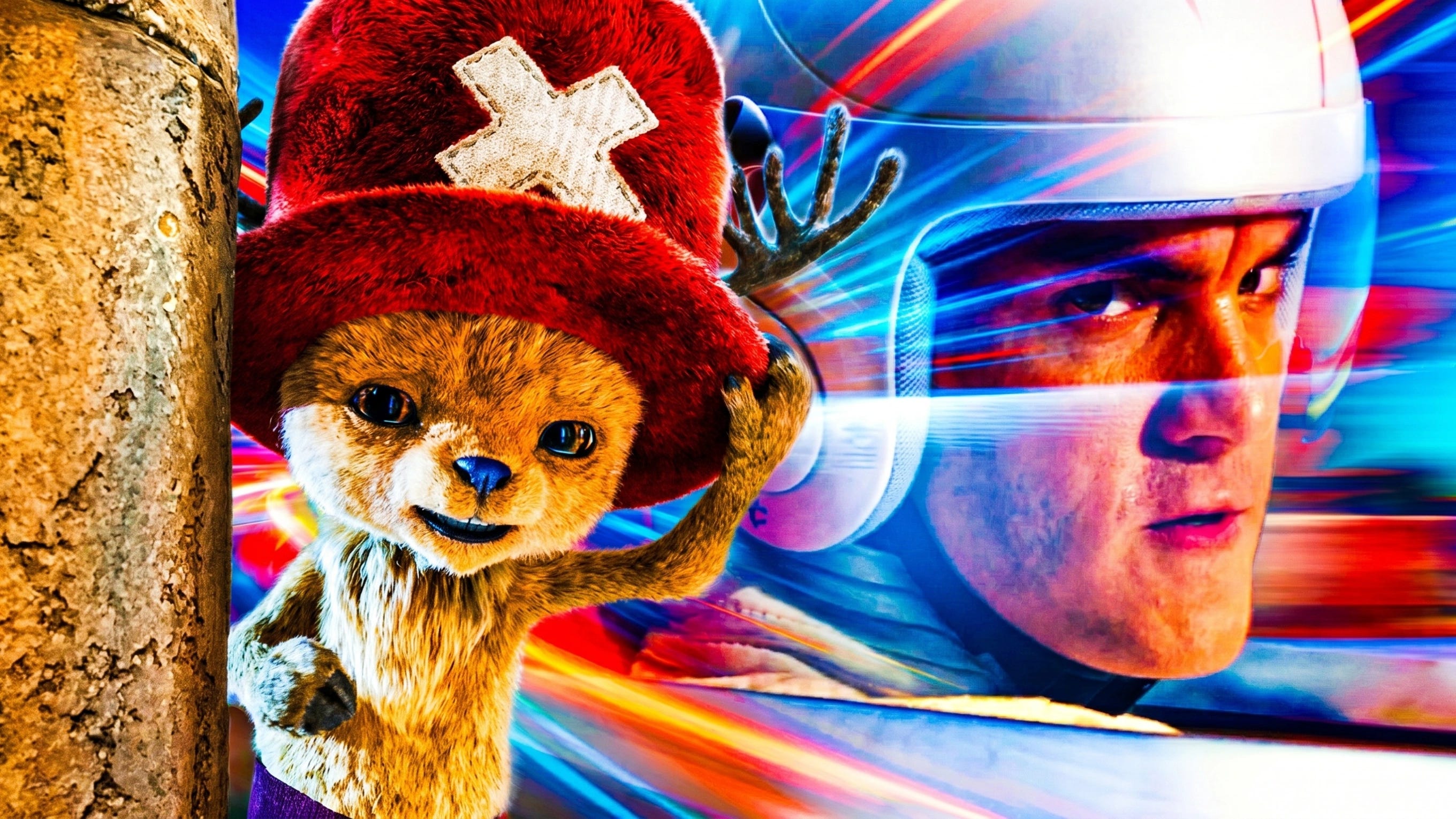
Nearly two decades before the live-action One Piece became a monster hit on Netflix, The Wachowskis’ Speed Racer raced into theaters.
And it immediately crashed and burned.
Having just rewatched the theatrical rerelease in theaters, it’s easy to see why. It was way ahead of its time.
I saw the rerelease at Pittsburgh Mills, a ghost town of a mall with an incredible theater, and I took my two older kids with me. They weren’t prepared for what they were about to see.
I told them up front that visually there’s nothing like it on the planet, and I stand by that.
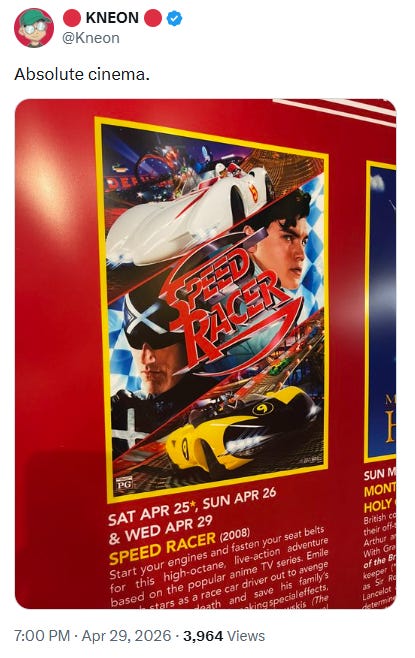
The movie looks fantastic. Not sure if what we saw was the new 4K remaster or just a really clean print, but it held up against anything new in theaters and then some.
It really needs to be seen on a big screen to be appreciated. There’s a density of visual information happening in every frame that home video flattens out, even on a good TV.
The Wachowskis knew what they were doing. Unfortunately, nobody else did.
Speed Racer Was a Box Office Disaster That Was Actually Doing Something New
The numbers in 2008 were brutal.
Speed Racer opened May 9 to $18.56 million across 3,606 theaters, finishing third behind Iron Man and What Happens in Vegas. Yes, that’s the Cameron Diaz / Ashton Kutcher Vegas one, and yes, it beat Speed Racer.
The film closed its domestic run at $43.9 million, picked up another $50 million internationally, and ended at roughly $93.9 million worldwide on a $120 million production budget. Per Box Office Mojo, that’s a flop by any reasonable accounting.
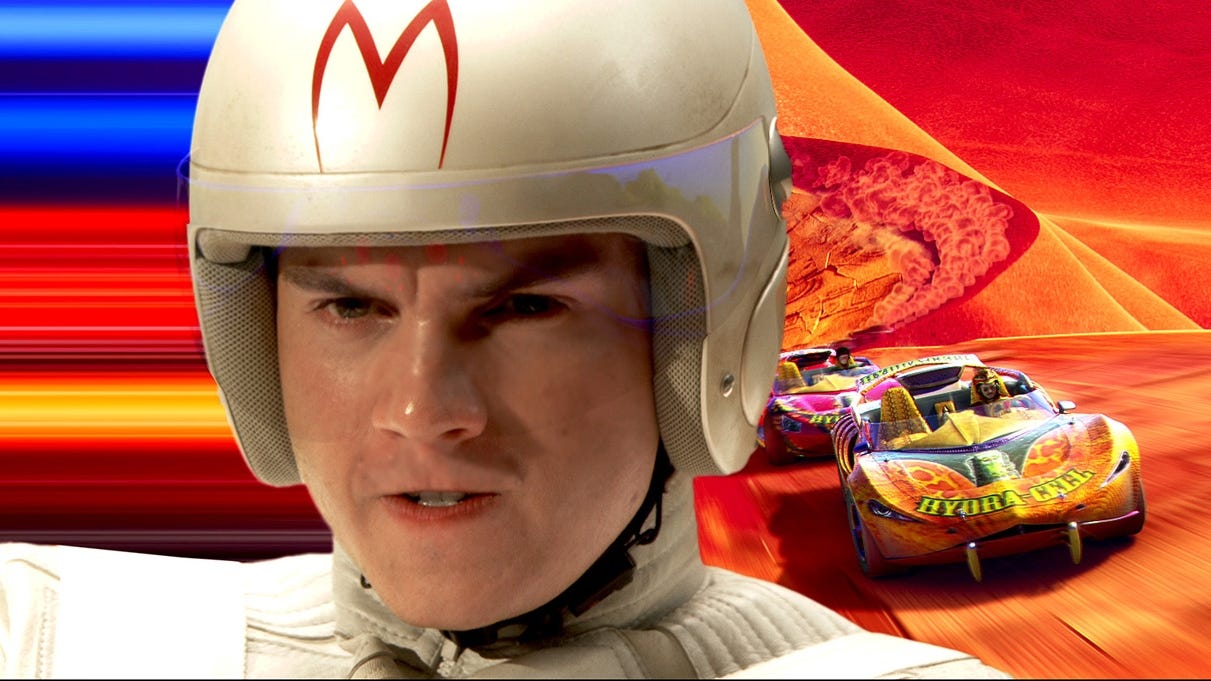
The reviews matched the box office. Critics found the visual intensity exhausting and the story thin underneath all the spectacle.
Warner Bros. spent the press tour talking up merchandise potential, which is the kind of thing studios do when they need to change the subject.
But what the Wachowskis were actually doing was something nobody had really attempted at that scale.
Filmed June through August of 2007 at Babelsberg Studios near Berlin and Potsdam, Speed Racer was the directors’ first time using HD digital cameras, and the entire production took place on greenscreen stages with digital environments and cars added later.
The visual approach pulled from pop art, cubism, and the flat multi-layered look of cel animation. Everything in frame stayed in sharp focus, foreground to background, the way anime treats every layer with equal visual weight.
![Speed Racer – [FILMGRAB]](https://substackcdn.com/image/fetch/$s_!rdfY!,f_auto,q_auto:good,fl_progressive:steep/https%3A%2F%2Fsubstack-post-media.s3.amazonaws.com%2Fpublic%2Fimages%2F0472760e-ea94-4b0e-b49c-12175db3ead1_1280x544.jpeg "Speed Racer – [FILMGRAB]")
Lana Wachowski later described the goal as wanting to assault every modern aesthetic of how movies were supposed to look. The term they used for the style was “poptimistic photo-anime.”
The Royalton auto factory sequence in particular feels like the Wachowskis were drinking from the same visual well Robert Rodriguez had been mining since the Spy Kids movies.
Saturated colors, deep-focus everything-in-the-frame composition, sets that exist as physical manifestations of cartoon imagination. Floop’s Castle for adults.
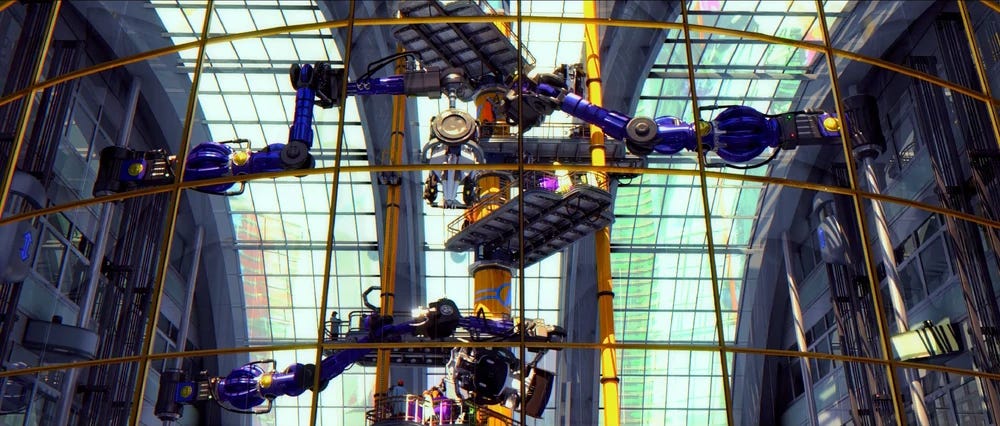
Rodriguez had been making the case for cartoon-logic-in-live-action since 2001, and the Wachowskis joined him in 2008 with the same instinct applied to general audiences instead of just kids.
The audience wasn’t ready.
The audience had been trained for over a decade by Hollywood that “live-action adaptation” meant grounding the source material in something resembling our world. Speed Racer told the audience in the opening minutes that this was a cartoon world rendered with real cameras, and a critical mass of viewers couldn’t make the contract.
Iron Man Beat Speed Racer the Same Weekend, and the MCU Spent a Decade Doing the Slow Version of the Same Problem
Here’s the part that’s funny in retrospect.
The Iron Man / Speed Racer head-to-head opening weekend in May 2008 was actually two opposite philosophies arguing in the same theaters on the same day.
Iron Man said we’ll grow into this slowly, we’ll start grounded and earn the cosmic stuff over years. Speed Racer said the cosmic stuff is the contract, we’re starting there.
Iron Man won the box office. Speed Racer won the argument over the next eighteen years.
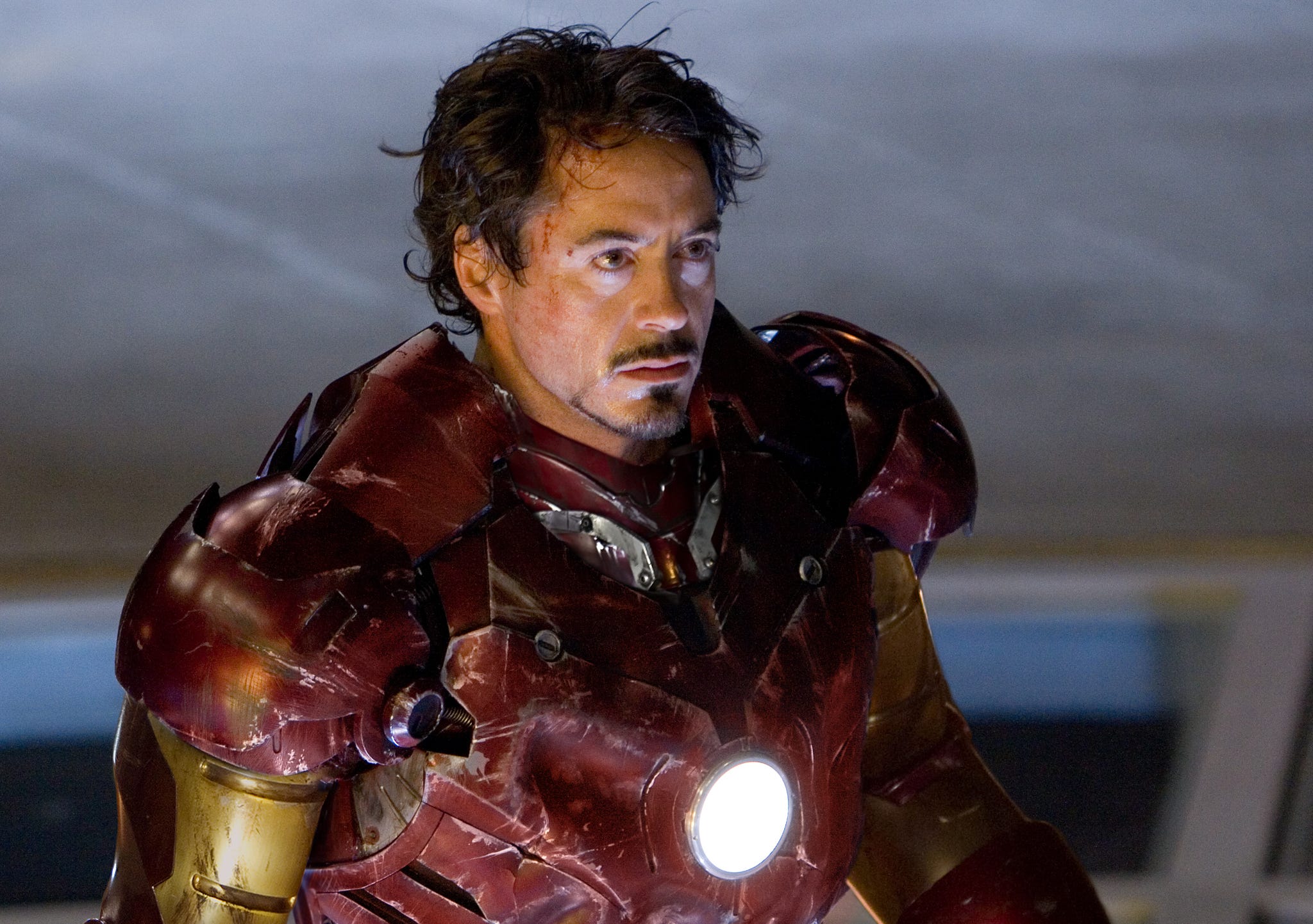
The MCU’s first phase is essentially the slow-rollout version of the same problem Speed Racer tackled head-on.
Iron Man (2008) is mostly grounded. Rich tech guy, flying suit, no other heroes, the world looks like our world. The Incredible Hulk follows the same pattern.
Iron Man 2 introduces some cosmic hints. Thor finally goes cosmic but immediately exiles its protagonist to a small town in New Mexico for most of the runtime so the audience doesn’t get culture shock.
Captain America: The First Avenger hides the cosmic in WWII period dressing.
Then Guardians of the Galaxy in 2014. And it doesn’t even feel like the same universe as Iron Man 1 and 2. Talking raccoon, sentient tree, cosmic empire.
James Gunn used Star-Lord’s Walkman, the Awesome Mix soundtrack, and earth-coded humor to negotiate the cartoon-logic contract within the first ten minutes, because the visuals alone couldn’t yet carry it.
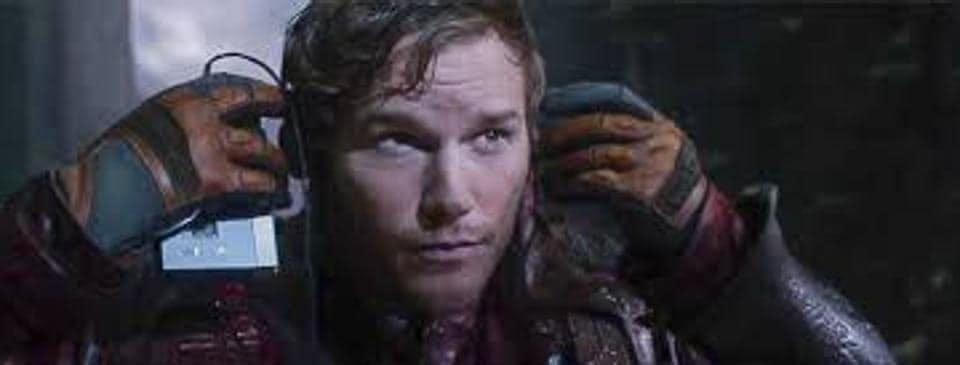
It worked because Marvel had earned six years of audience trust by then.
If Guardians had been Marvel’s first movie in 2008, it would have failed exactly the way Speed Racer failed.
That’s the part Hollywood understood and didn’t understand at the same time.
Marvel was right that 2008 audiences couldn’t have accepted Guardians on day one. The reason audiences couldn’t have accepted it is that Hollywood’s prior adaptation philosophy had trained them to expect realism in adaptations.
The Wachowskis tried to break that training in one movie. They couldn’t, because the training was too deep.
Marvel just had a decade of patience and infinite Disney money to slowly retrain the audience instead.
Hollywood spent ten years and a few billion dollars getting audiences to where Speed Racer wanted them on day one.
That’s not a strategic insight. That’s a luxury.
Everyone Who Tried the Marvel Approach Without Marvel Money Lost
Here’s what happened to everyone who tried the gradual approach to adapting cartoon source material without a ten-year runway and Disney’s checkbook.
Dragonball Evolution in 2009. Death Note in 2017. Cowboy Bebop in 2021.
Each one tried to “fix” anime by grounding it for a live-action audience. Each one stripped away the visual grammar that made the source material work in the first place. Each one failed.
The pattern is repeatable to the point of being a joke.
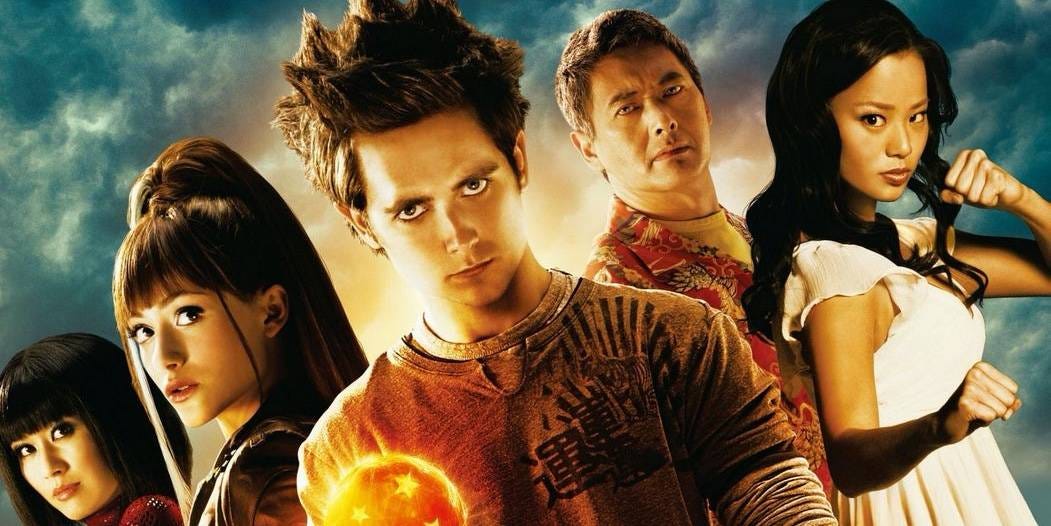
Take a property where the visual style is half the appeal. Decide the visual style is a problem to solve. Hire a production team to make it look like a normal show set in a normal world.
Watch the audience that loved the original walk away in the first episode because the thing they loved isn’t there. Watch the audience that didn’t know the original walk away because there’s nothing pulling them in.
Get cancelled.
Cowboy Bebop especially deserves to be remembered as the cautionary tale.
Netflix sank real money into it, the cast was largely game, the production design was at least trying. But the show kept apologizing for being Cowboy Bebop.
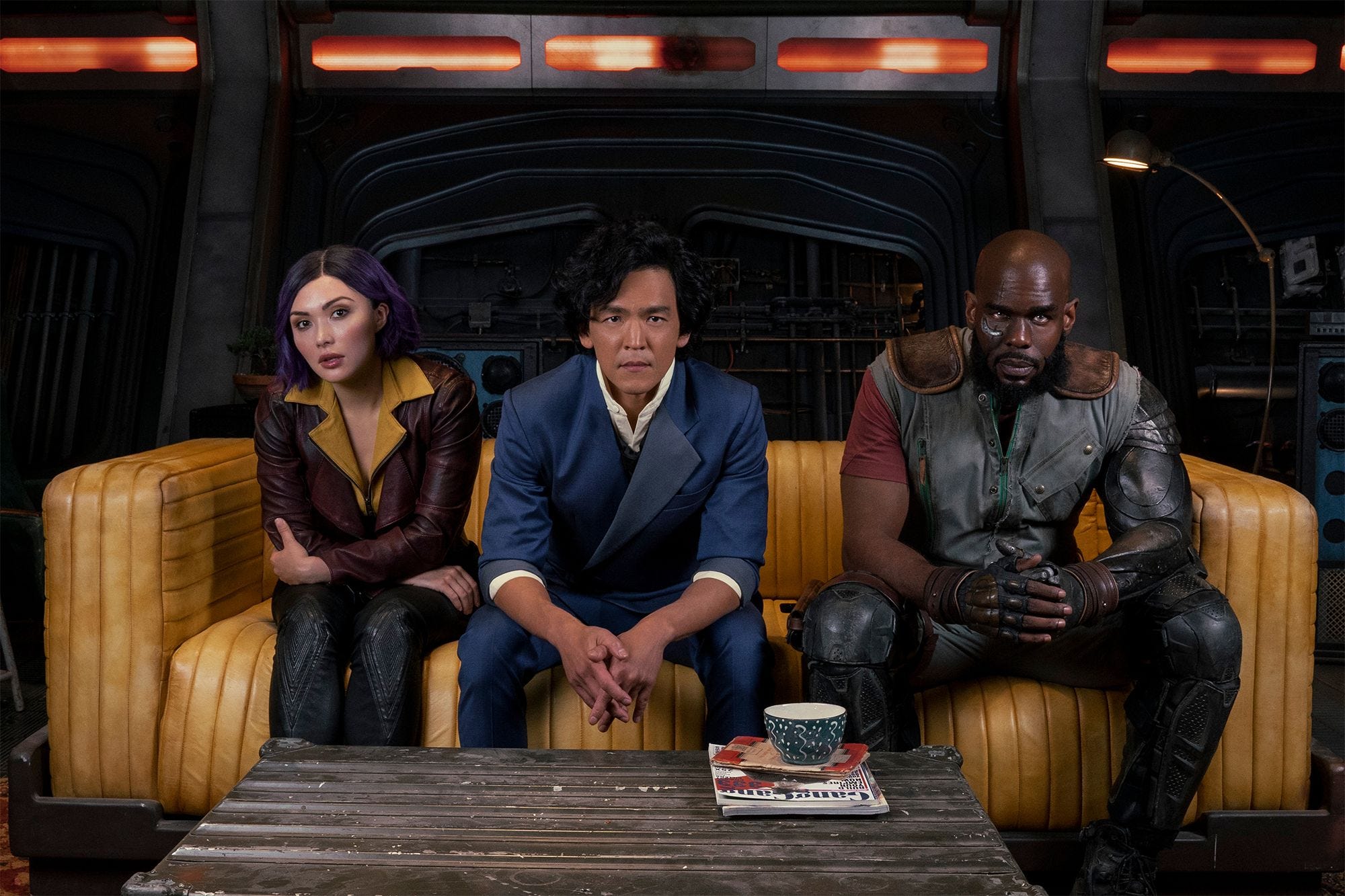
The strangeness was sanded off. The cartoon physics that made the anime work were dialed back. The audience that came in already loving the source material spent every episode noticing what was missing.
Cancelled after one season.
The studios had ten years of evidence that grounding cartoon source material was killing it, and they kept doing it anyway. Because the prevailing wisdom said live-action audiences need realism.
The Brain Doesn’t Have a Problem With Talking Reindeer. The Brain Has a Problem With Talking Reindeer in a World That Said It Was Realistic
Here’s the thing nobody at Hollywood seemed to understand for over a decade.
Audiences don’t reject cartoon stuff in live-action because it’s cartoon stuff. They reject it because the visual world told them it was a realistic story, and then asked them to accept impossible things.
The brain doesn’t have a problem with talking reindeer. The brain has a problem with talking reindeer in a world that just spent forty minutes establishing itself as not having talking reindeer.
This is uncanny valley extended past faces, into physics, scale, color, and event logic.
When something looks almost real but the rules don’t match real, the gap between what we see and what reality looks like becomes the focus. Realistic-looking Chopper makes us notice the parts that are wrong about realistic-looking Chopper.
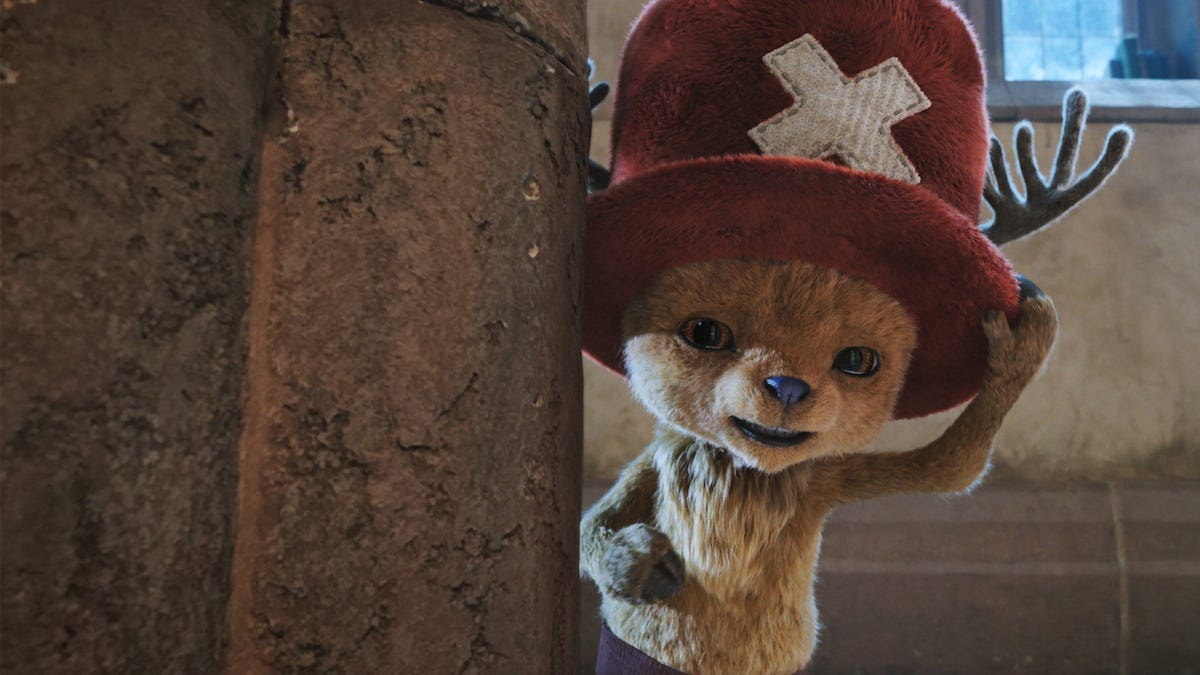
Plush-toy Chopper bypasses the comparison entirely because we’re not measuring it against anything in our world.
What cartoons figured out a hundred years ago is that you set the rules early and the audience accepts them.
Within thirty seconds of a Looney Tunes short, Wile E. Coyote falls off a cliff and bounces. We don’t think about it.
The visual grammar declared this is a world where physics is negotiable and we accepted the contract. Live-action anime adaptations that ground the visuals are also asking us to accept impossible physics, but they’re asking in a world that visually claims to be ours.
Cognitive dissonance. Audience checks out.
The Wachowskis understood the contract had to be set in the first frame. So did Rodriguez. So did James Cameron when he got around to it.
Battle Angel Alita Was Rodriguez Coming Back to What He Already Knew
Battle Angel Alita in 2019 is the moment everything turns.
Robert Rodriguez directing, James Cameron producing and co-writing. The fight that supposedly happened in production was over Alita’s huge anime eyes, which Rodriguez and Cameron insisted on keeping despite production pressure to make them more “realistic.”
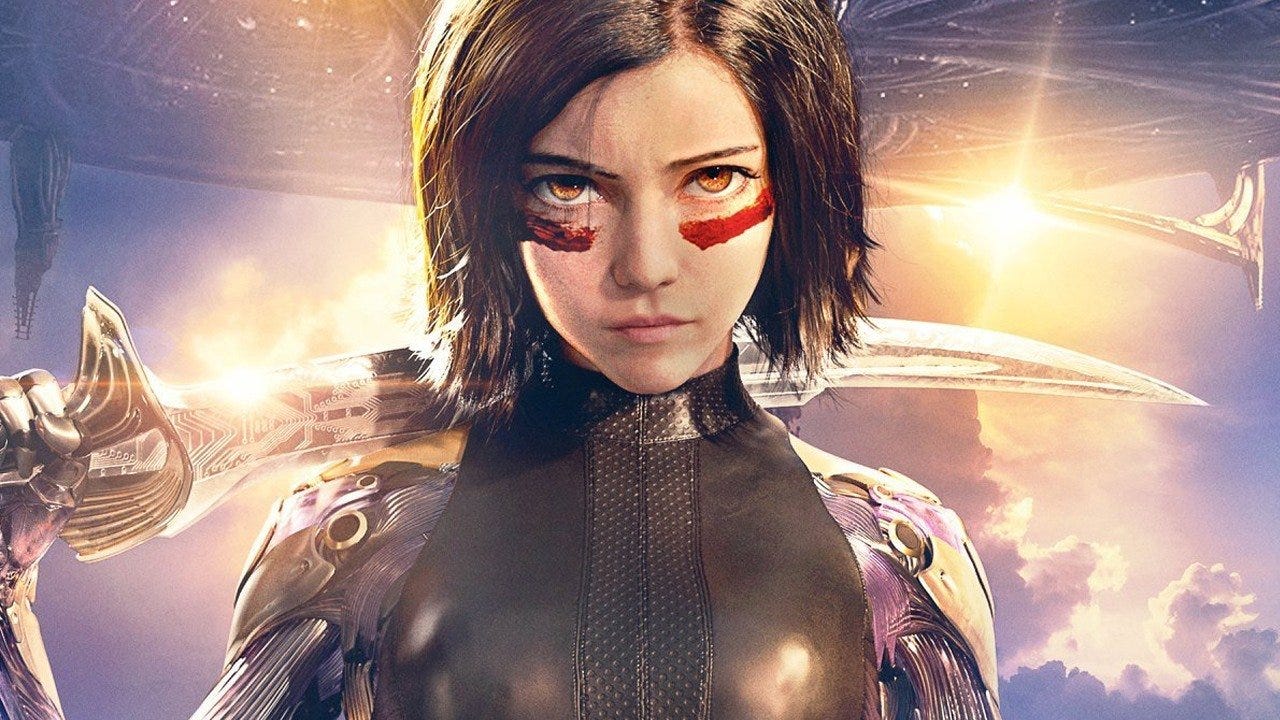
That fight is the entire thesis of this article in one design decision. The eyes told the audience in the first frame that this is a cartoon-coded world even though we’re using real cameras and real environments.
Without the eyes, Alita would have been Ghost in the Shell (2017). Beautifully shot, realistic-looking, and unable to support its own anime concepts because the visual contract said realism.
With the eyes, the audience accepted the rest of the cartoon physics and emotional beats because the contract was clear in the first ten seconds.
Alita made $404 million worldwide on a $170 million budget, which is technically still a flop on the studio math, but it was a respectable flop and critically the first major Hollywood live-action anime in a decade that audiences actually responded to.
The eyes did the work.
What’s worth pointing out is that Rodriguez had been running this exact playbook since Spy Kids in 2001.
The contract-setting move, the cartoon logic in real cameras, the trust-the-audience instinct. He was the through-line the whole time.
Cameron’s involvement gave Alita the production scale and budget to land the argument at adult-audience scale, but Rodriguez was the one who knew the visual contract had to be set up front because he’d been doing it for two decades.
Speed Racer was the Wachowskis joining him for one swing. Alita was him coming back to the well with reinforcements.
One Piece Is Doing the Same Thing Speed Racer Did, Just With Real Ships Instead of Greenscreen
Netflix’s live-action One Piece, premiering Season 1 on August 31, 2023, is the proof that the Wachowski-Rodriguez instinct was correct all along.
The production approach is interesting because it’s the opposite of Speed Racer methodologically. Where Speed Racer went all-in on greenscreen and digital environments, One Piece went all-in on practical sets.
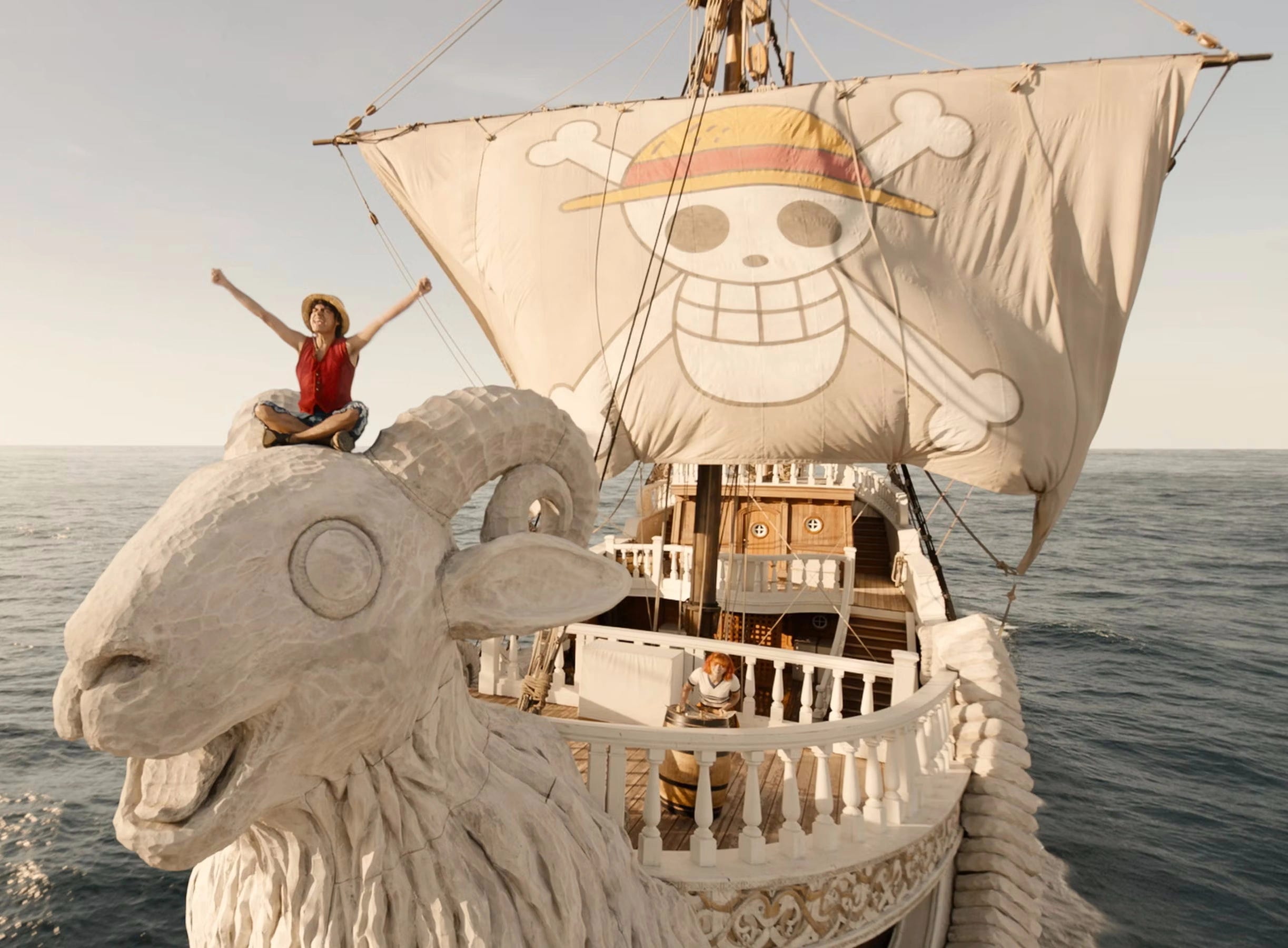
Cape Town production. The Going Merry built as a real ship, scavenged from real ship parts. The Baratie restaurant as a physical location. Costume and hair design pulled directly from Eiichiro Oda’s Color Walk art books as the reference bible.
But the underlying instinct is identical. Don’t dial back the source material. Build a production approach that supports its strangeness instead.
The key moment is Eiichiro Oda’s intervention on Tony Tony Chopper’s design.
Oda is executive producer on the show, and per Netflix’s own Tudum coverage, when the design team showed him test materials for a hyper-realistic reindeer-hybrid Chopper, he pushed back and demanded the cute plush-toy version.
That’s the contract-setting decision in real time.
The team’s first instinct was to ground Chopper in realistic anatomy, the failure mode that killed Cowboy Bebop. Oda overrode it because he understood, the same way the Wachowskis understood, that the visual contract has to be set up front or the whole thing falls apart.
Co-showrunner Matt Owens called Oda’s manga the team’s “north star.” Production designer Richard Bridgland talked about building practical sets so the world would feel like “a real but parallel universe” instead of floating in digital space.
The show kept Luffy’s rubbery cartoon stretching by focusing the VFX on weight, wrinkles, and motion that honored the manga rather than making him look like plastic.
The numbers are vindication-level. Season 2, One Piece: Into the Grand Line, dropped March 10, 2026 and pulled 16.8 million views in its first four days, ranking number one worldwide for the week per Variety’s reporting.
Season 3 is already in production. Speed Racer made $93 million globally and got crucified. One Piece embraces the same visual grammar and dominates Netflix worldwide.
The Wachowskis Were Right. Hollywood Just Took Eighteen Years to Catch Up
By the time One Piece dropped a talking reindeer in episode eight of Season 1, nobody blinked.
Because we’d already watched a guy stretch his arms across the screen and a clown reattach his own head.
The contract was set in the first frames of the first episode, and once you accept the contract, a talking deer is just another Tuesday.
That’s what Speed Racer was trying to do in 2008 in one movie. The Wachowskis knew what they were doing. Hollywood didn’t.
It took Robert Rodriguez coming back to the visual logic he’d been using since Spy Kids, James Cameron co-signing it with Alita, and Eiichiro Oda personally overriding bad design decisions on a Netflix show before the rest of the industry figured out what was right there in 2008.
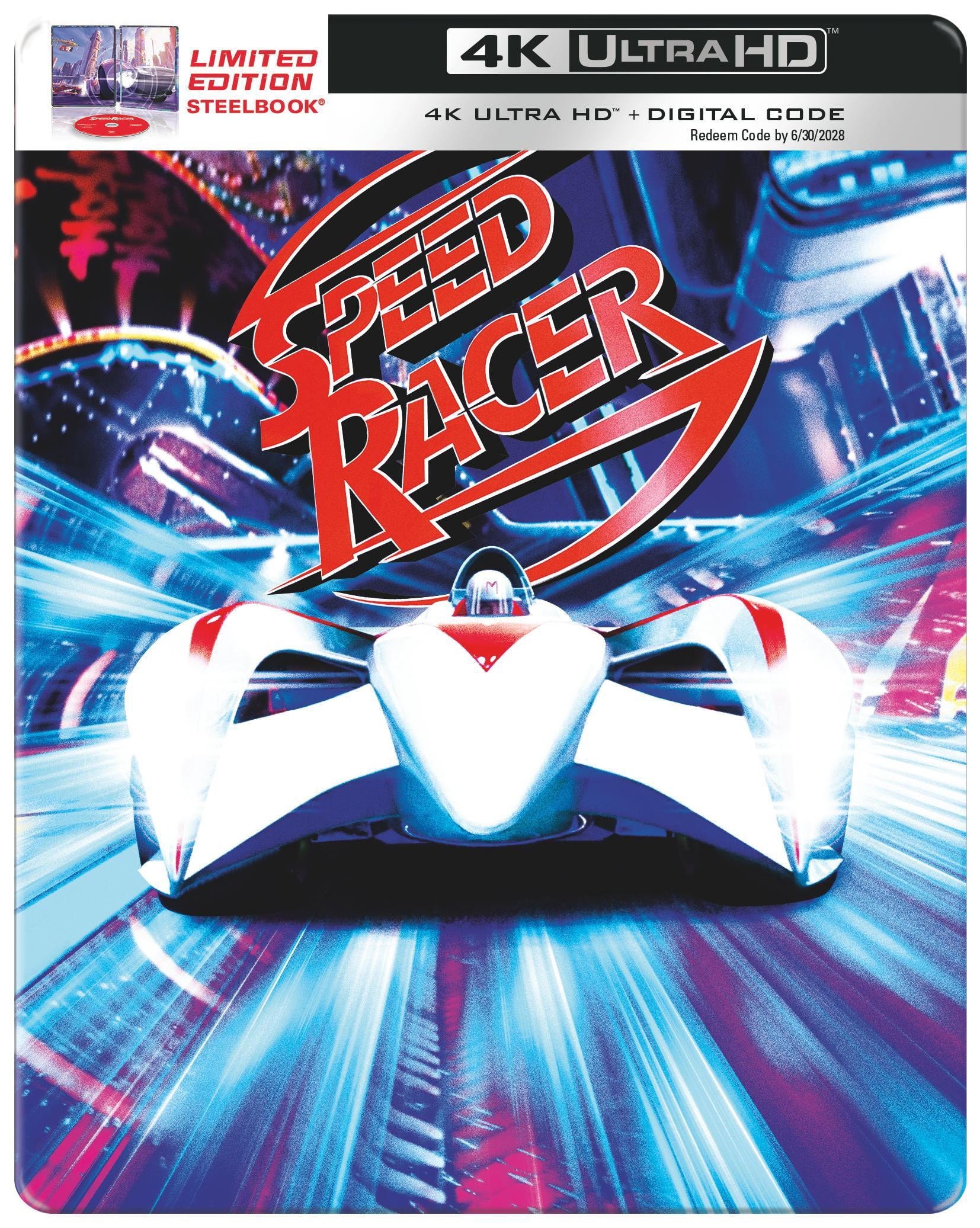
Speed Racer is in theaters for a limited time now, and on 4K Blu-ray May 19. Go see it on the biggest screen you can find.
The Wachowskis will get the last laugh either way.
This article was brought to you in part by The Reefers of more.clownfishtv.com. Subscribers there get the full Clownfish TV podcast feed including livestreams and members-only episodes that don’t make it to the free side, plus articles like this one delivered to their inbox. Free subscribers get the articles. Paid subscribers get everything. You can also find the show on YouTube at @ClownfishTV.
About the author:
Thom “Kneon” Pratt is a former newspaper journalist and working comic book creator. He co-hosts the Clownfish TV podcast and the Pirates & Princesses podcast, both with Geeky Sparkles, where they cover our weird timeline, geek culture, tech, games, theme parks, and occasionally the paranormal. Gen X, eclectic, based in Pittsburgh. Follow him on X at @kneon.
Hat Tips:
Box Office Mojo, Speed Racer (2008)
Variety, “One Piece Season 2 Ratings: 16.8 Million Netflix Views” (March 17, 2026)
Netflix Tudum, “How Did the ONE PIECE Team Bring Eiichiro Oda’s World to the Screen?” (September 12, 2023)
Establishing Shot, “Speed Racer and the Assault on Aesthetics of the 20th Century” (March 21, 2022)
GQ, “Movies Still Haven’t Caught Up to Speed Racer” (April 23, 2026)
Collider, “How the One Piece Live Action Series Balanced CGI and Practical Effects” (August 30, 2023)
I loved Speed Racer when it was in theaters! My dad had watched it when the show came to the US, and it was how we bridged my love for anime and cartoons. I still remember how he walked out of the theater, telling me things I didn't realize cause I only watched Speed Racer when it was still on Cartoon Network when I could catch it. He loved the film, and I need to rematch it to relive that memory.
Great post. I loved Speed Racer and thought it was underrated. Now I feel like I understand why.